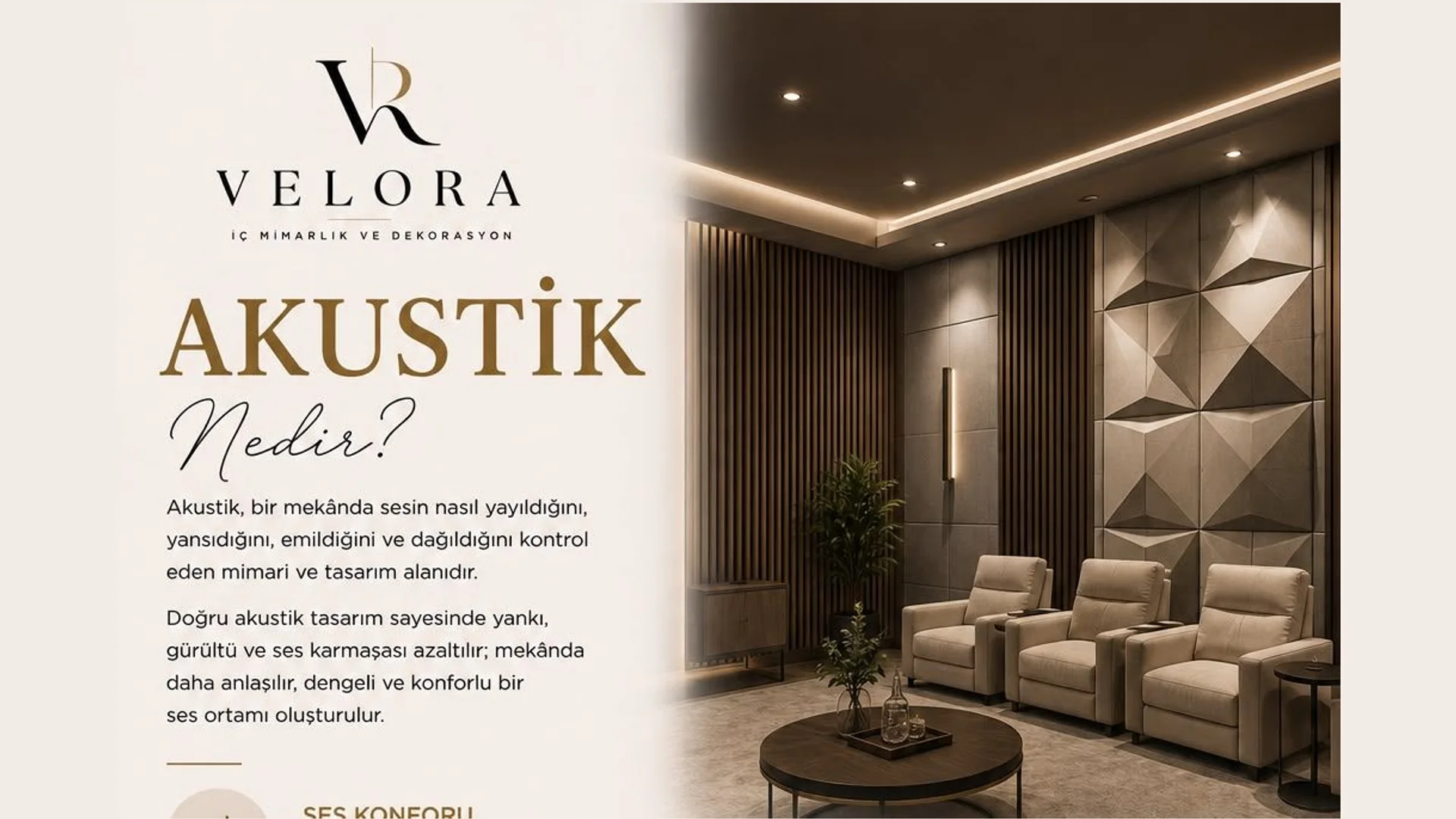
The architectural discipline that controls how sound spreads, reflects and is absorbed in a space.
Acoustics is the architectural discipline that controls how sound spreads, reflects, is absorbed and disperses within a space. Good acoustic design reduces echo, noise and confusion, creating a clearer, more balanced and more comfortable sound environment.
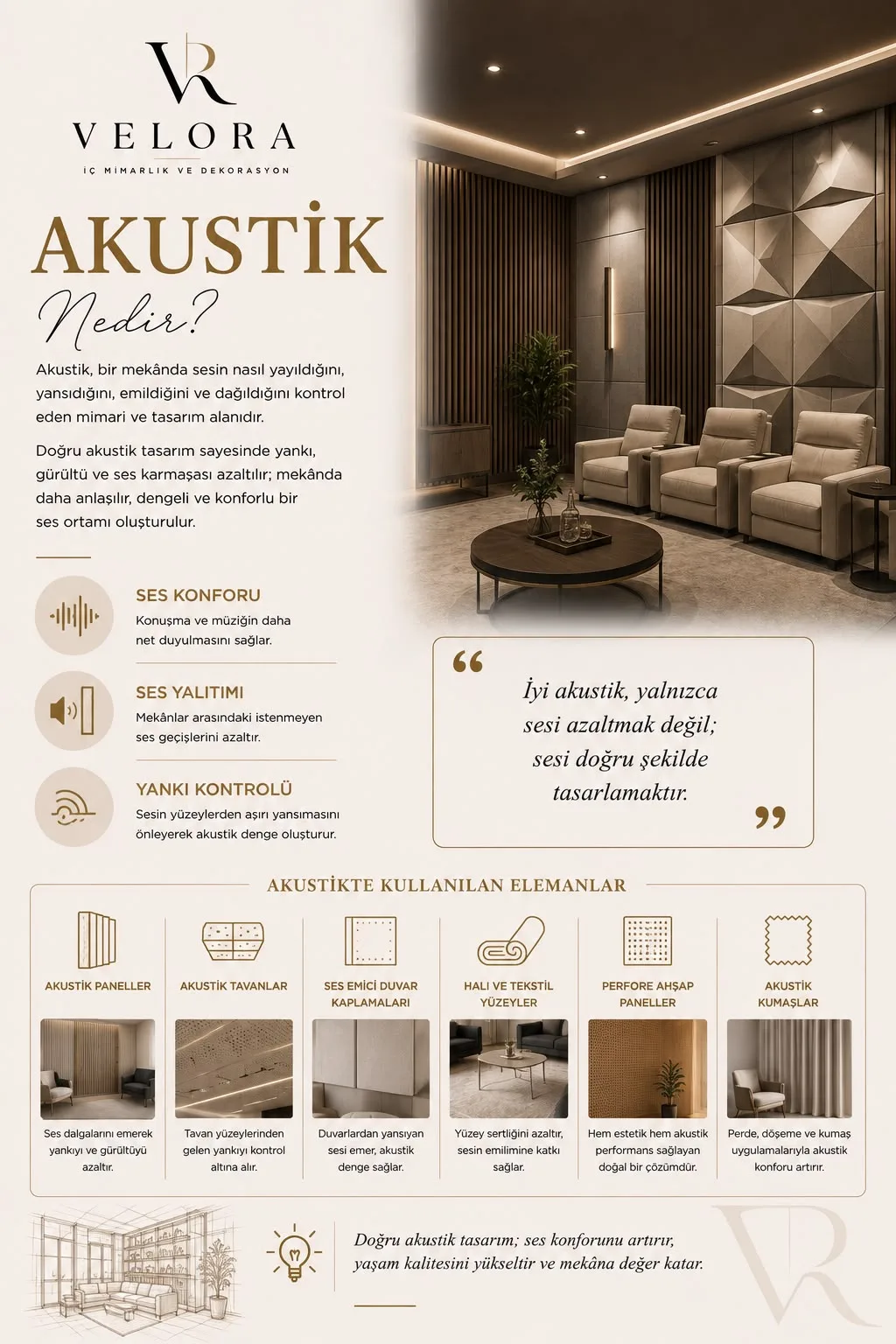
Three headings
- Sound comfort: speech and music are heard more clearly.
- Sound insulation: unwanted transfer between rooms is reduced.
- Echo control: excessive reflection from surfaces is prevented, giving acoustic balance.
Elements used
- Acoustic panels: absorb sound waves, cutting echo and noise.
- Acoustic ceilings: bring reflection from the ceiling plane under control.
- Absorbent wall linings: soak up reflection from the walls.
- Carpet and textiles: soften hard surfaces and contribute to absorption.
- Perforated timber panels: a natural solution offering both looks and performance.
- Acoustic fabrics: curtains and upholstery that raise acoustic comfort.
Insulation is not absorption
Sound insulation stops sound passing from one space to another; it needs mass and airtightness. Sound absorption reduces echo within the same room; it needs porous, soft surfaces. You cannot fix a noisy neighbour with acoustic panels, and you cannot fix echo in your own room by thickening the wall.
Where it matters most
Open plan offices, meeting rooms, restaurants, home cinemas, hotels and high-ceilinged living spaces. Any room dominated by hard surfaces — glass, marble, concrete — needs acoustic treatment.
Points to watch
- Making every surface absorbent leaves the room sounding dead; balance is the point.
- Acoustic solutions belong in the design stage — panels added afterwards always look added.
- In insulation the weakest point decides everything: the gap under the door, a socket box, a ventilation duct.