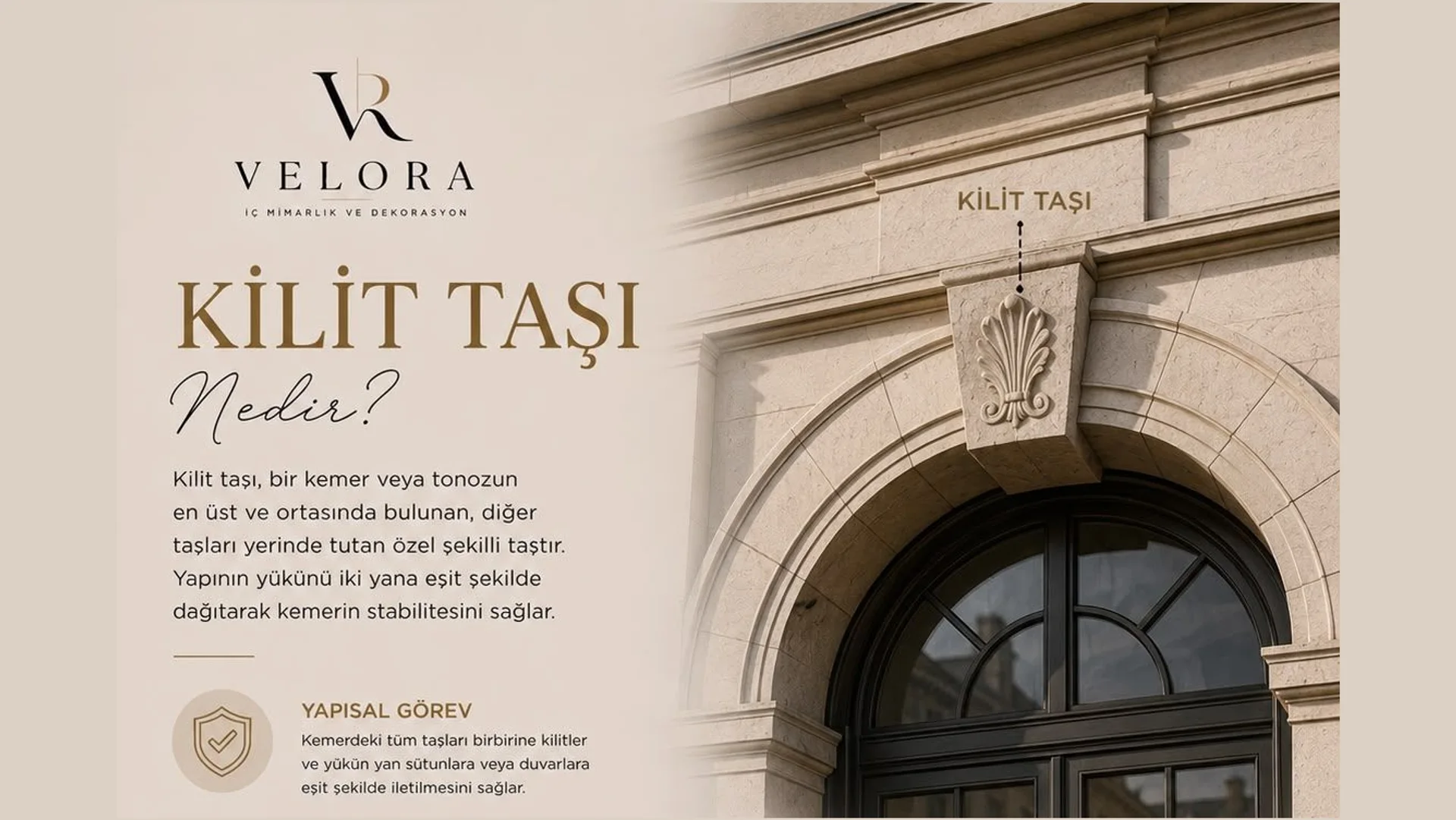
The specially shaped stone at the top of an arch that locks all the others in place. Small, but the reason the arch stands.
A keystone is the specially shaped stone at the top and centre of an arch or vault that holds all the other stones in place. It distributes the load evenly to both sides and gives the arch its stability.
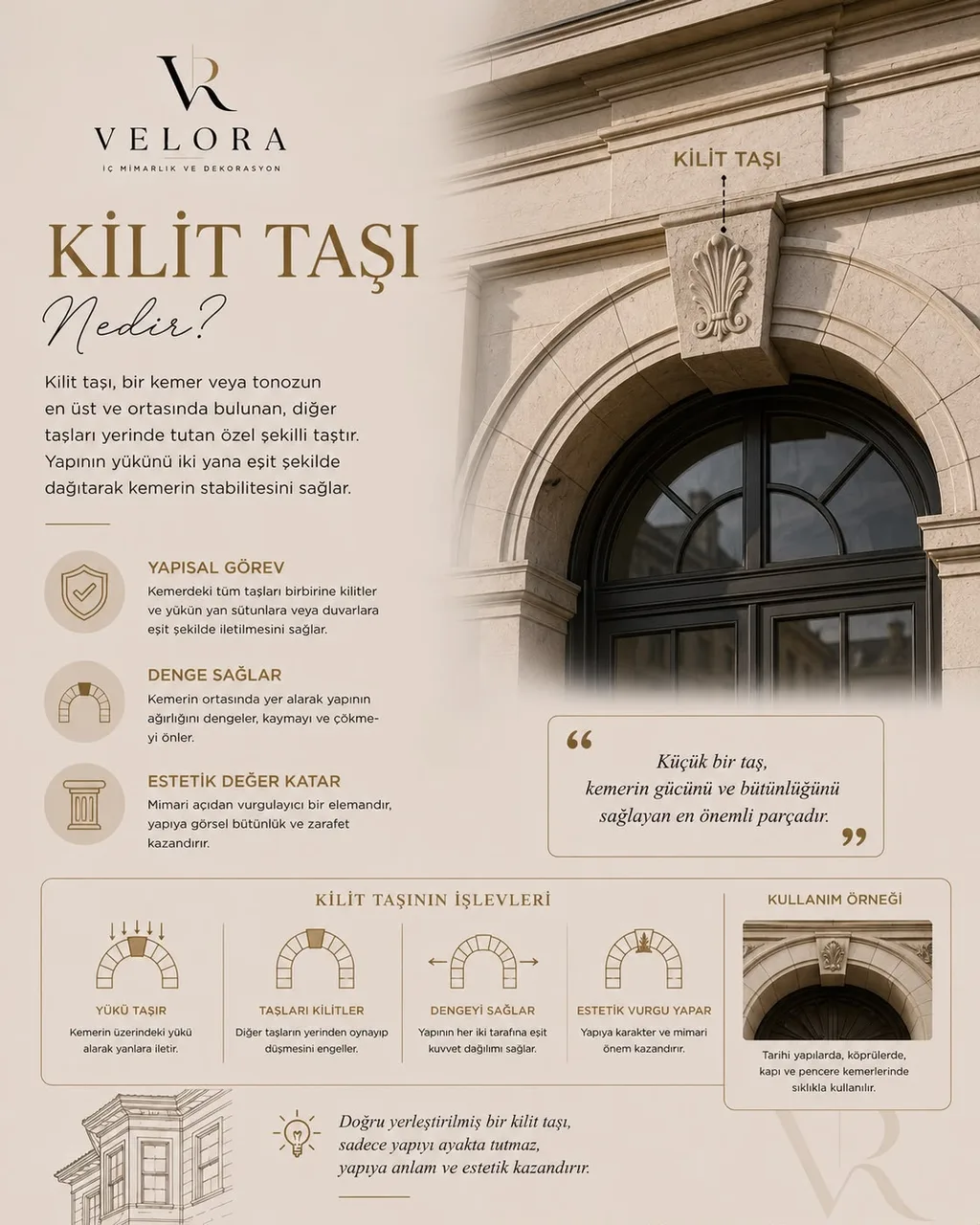
What it does
- Carries load: takes the weight above the arch and passes it sideways.
- Locks the stones: stops the other voussoirs from slipping and falling.
- Balances: distributes force equally to both haunches.
- Adds emphasis: gives the building character and architectural weight.
Structural role
It locks every stone of the arch together and transfers the load evenly to the piers or walls. Sitting at the centre, it balances the weight of the structure and prevents sliding and collapse.
Aesthetic value
The keystone is an emphatic element. Because it sits above eye level on the façade, the carving, cartouche or relief applied to it defines the identity of the building. In Ottoman and European architecture the keystone was often treated as the mason’s signature.
Where you find it
In historic buildings, bridges, door and window arches, vault transitions and courtyard arcades. Today it reappears on classical and neoclassical façades as a decorative accent above the entrance.
Points to watch
- The keystone must be cut as a wedge to suit the arch geometry — a straight cut transfers nothing.
- In restoration, the arch must be propped before a keystone is removed.
- Purely decorative keystones carry no load and should not be mistaken for structural ones.