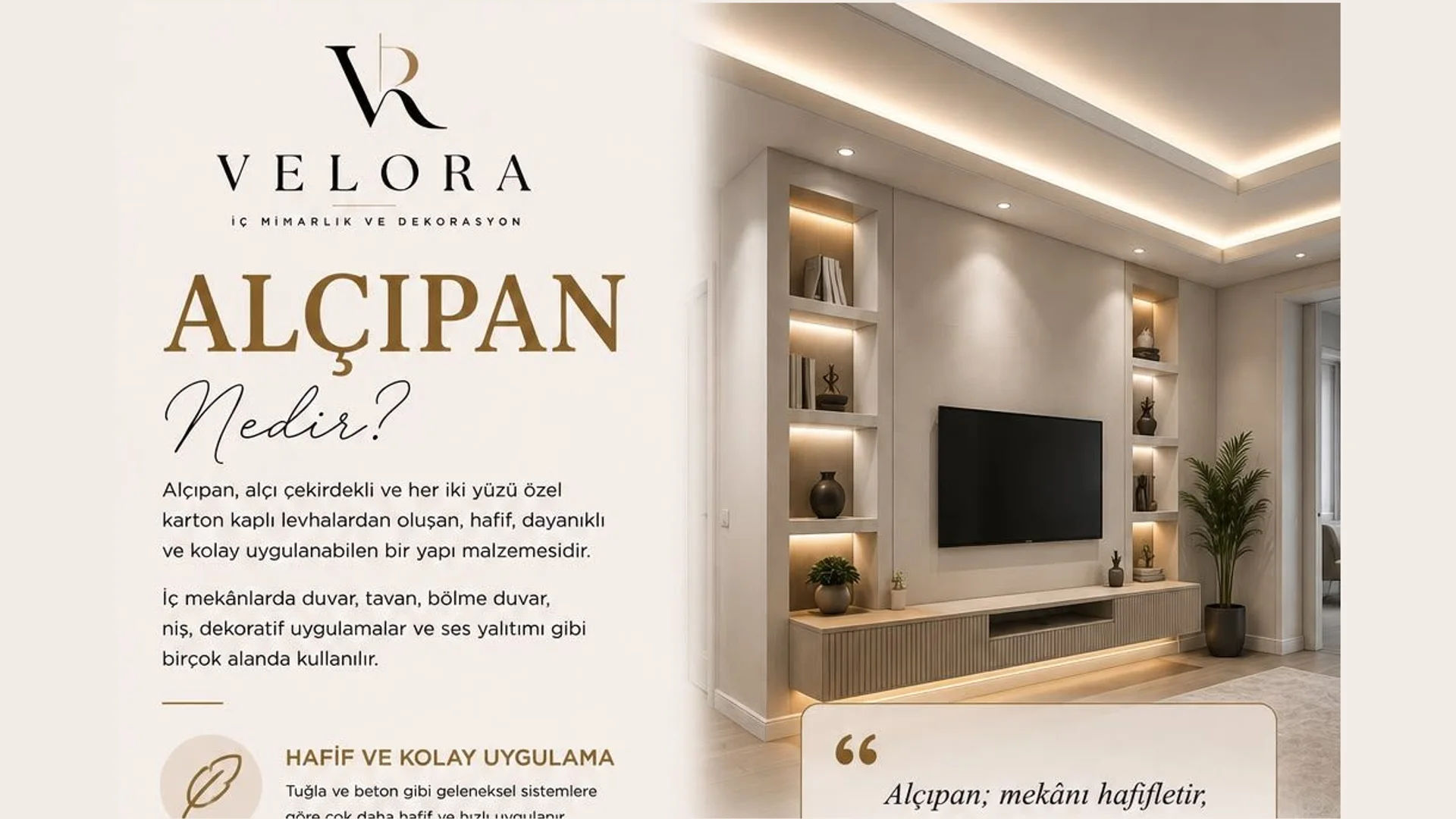
Gypsum board fixed to a metal frame: the fastest way to divide a space, shape a ceiling and hide services.
Drywall is a board made of a gypsum core faced with paper on both sides, screwed onto a metal frame. It is light, quick to build and needs no wet trades, so a space is usable again within days.
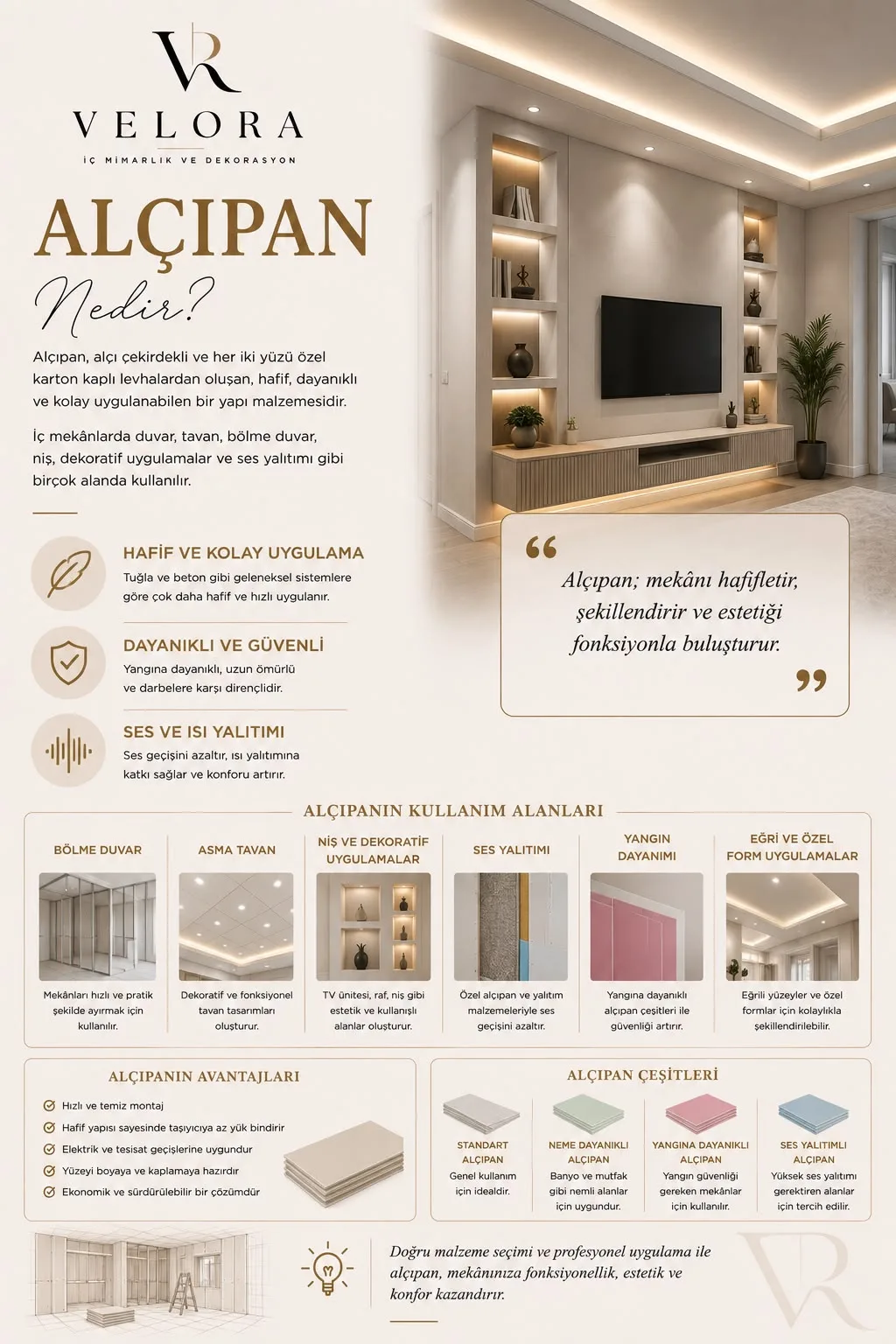
Where it is used
- Partitions: non load-bearing internal walls, far lighter and faster than blockwork.
- Suspended ceilings: hide services, ducts and lighting infrastructure and allow level changes.
- Niches and shelving: recessed storage and concealed lighting details.
- Acoustic separation: mineral wool inside the frame cuts sound transfer between rooms.
Board types
- Standard (white): general use in dry rooms.
- Moisture resistant (green): bathrooms, kitchens and around wet areas.
- Fire resistant (red): escape corridors, service shafts, high risk areas.
- Acoustic (blue): bedrooms, hotel rooms, meeting rooms.
How it is built
- Wall and ceiling lines are set out with a laser.
- A frame of U and C profiles is erected; hangers are fixed to the slab.
- Electrics and services are run inside the frame.
- Boards are screwed on with staggered joints.
- Joints are taped and the face is skimmed.
Advantages
- Light — adds no meaningful load to the structure.
- Fast — a dry system with no waiting time.
- Reversible — layout changes stay cheap.
- Tidy — cables and pipes disappear into the wall.
Points to watch
- Heavy items such as a wall-hung TV need timber or steel backing in the frame.
- In wet rooms the green board alone is not enough; tanking is a separate job.
- Stud spacing should not exceed 60 cm or the surface will ripple.
Tagsalçıpanbölme duvarasma tavan