The material that fills the joints between tiles and stone: it keeps moisture out and quietly changes how a surface reads.
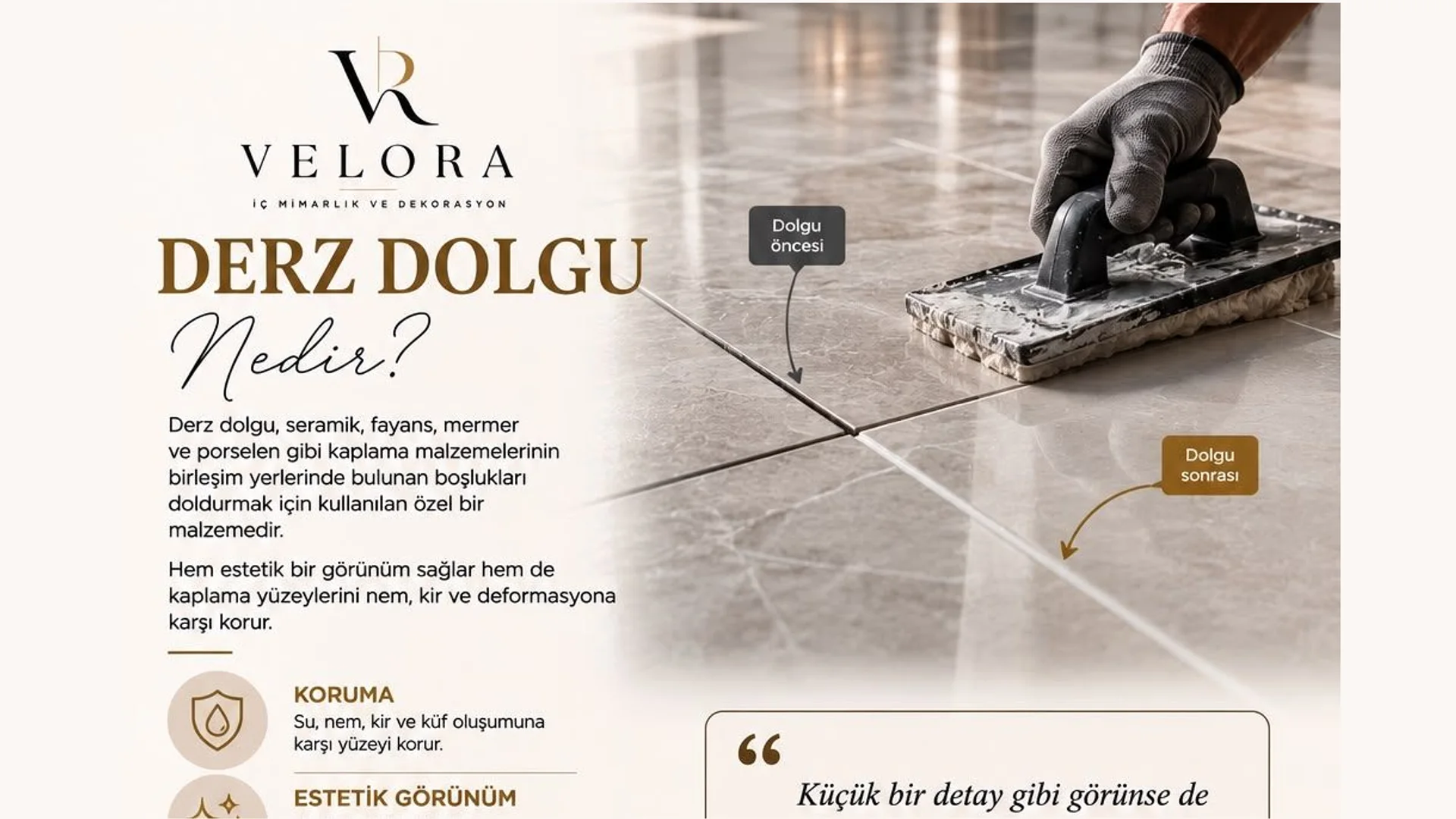
Grout is the material that fills the gaps left where tiles, ceramics, marble or porcelain meet. It completes the surface visually and protects the covering against moisture, dirt and movement.
What grout does
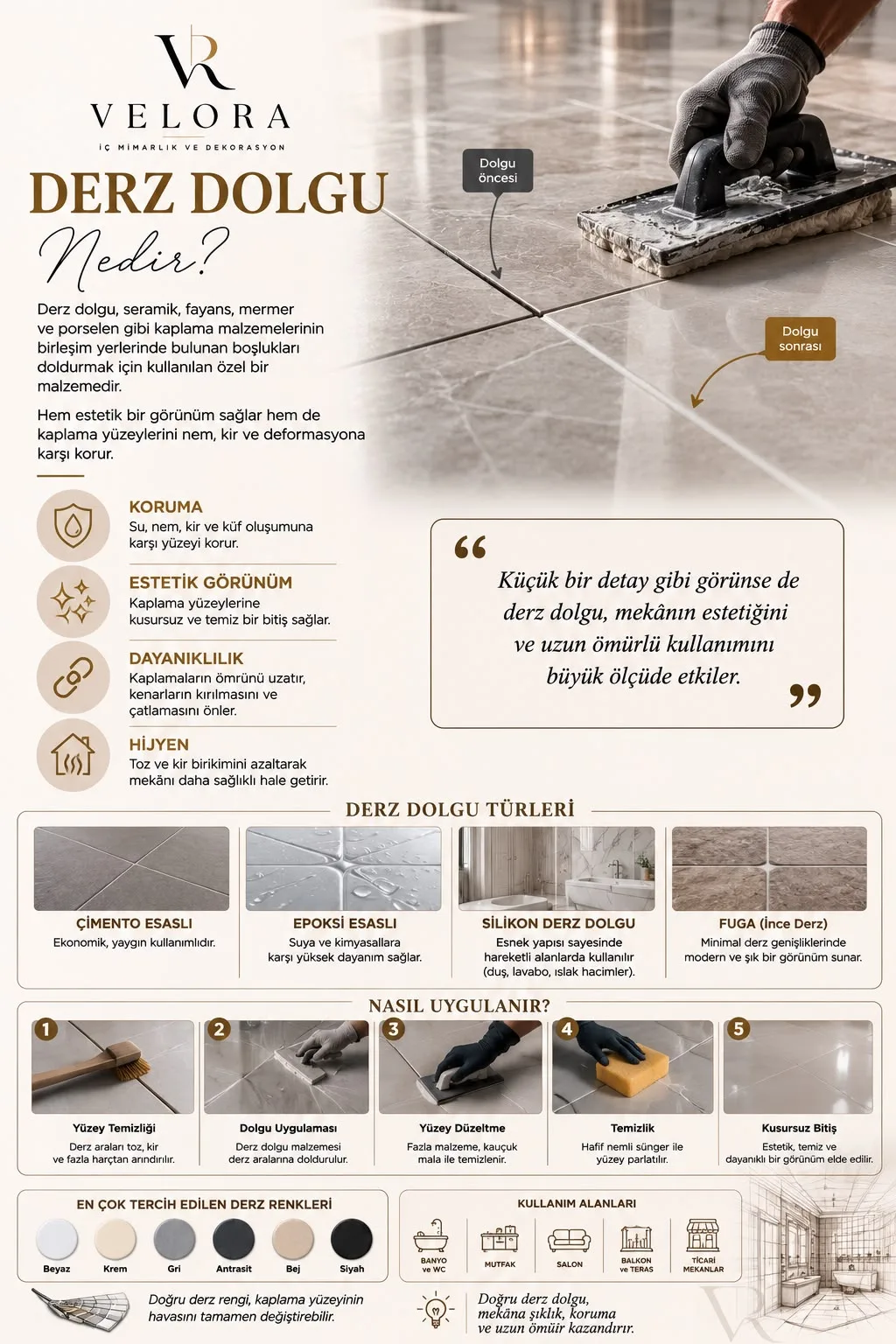
- Protection: seals the surface against water, damp, dirt and mould.
- Appearance: closes the gaps so the covering reads as one continuous plane.
- Durability: absorbs small movements and reduces the risk of chipping and cracking.
Types of grout
- Cement based: the most common and most economical option, widely used indoors.
- Epoxy: the most resistant to water, chemicals and staining — ideal behind kitchen counters, in pools and wet rooms.
- Silicone: flexible, used at corners and wherever two planes can move against each other.
- Fine joint grout: a finely graded mix made for narrow joints.
How it is applied
- The surface is cleaned and dust or mortar residue is removed from the joints.
- The powder is mixed with water at the stated ratio and left to rest.
- A rubber float presses the grout into the joints with diagonal strokes.
- The excess is taken off with a damp sponge.
- Once cured, the surface is polished with a dry cloth.
Colour changes the room
Grout in the same tone as the tile makes the surface read as a single piece and enlarges the room. A darker grout emphasises the texture and the modular grid. Mid tones hide traffic marks on floors; greys keep bathroom joints looking clean for longer.
Points to watch
- Joint width should follow the tile format — large formats crack with a joint that is too narrow.
- Cement based grout in wet areas must be sealed with a water repellent.
- Do not wash the surface before the curing time is over.
Tagsderzseramikıslak hacim