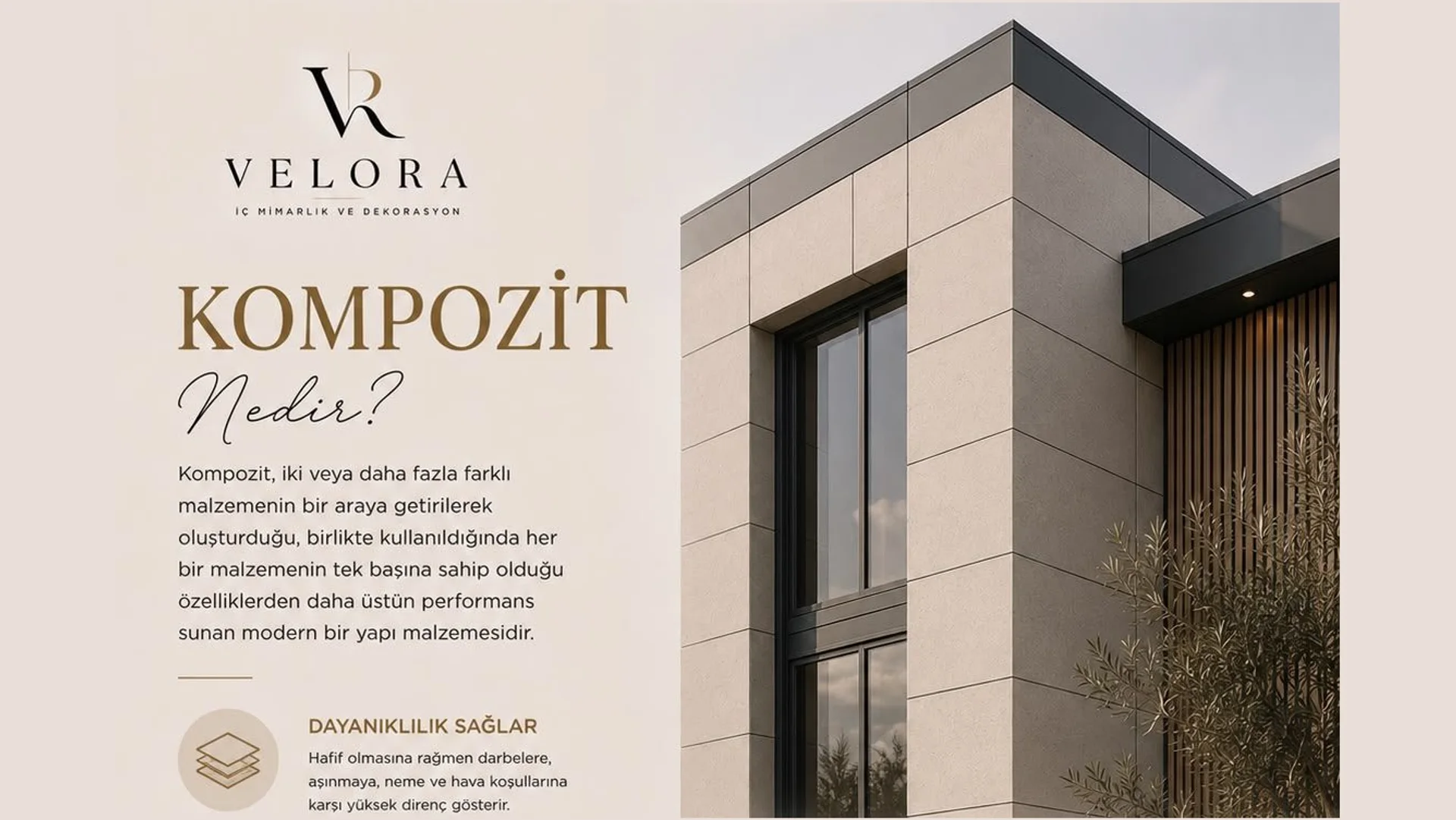
A modern building material in which two or more components together outperform what each could do alone.
A composite is a modern building material made by bringing two or more different materials together so that the combination performs better than any of them alone.
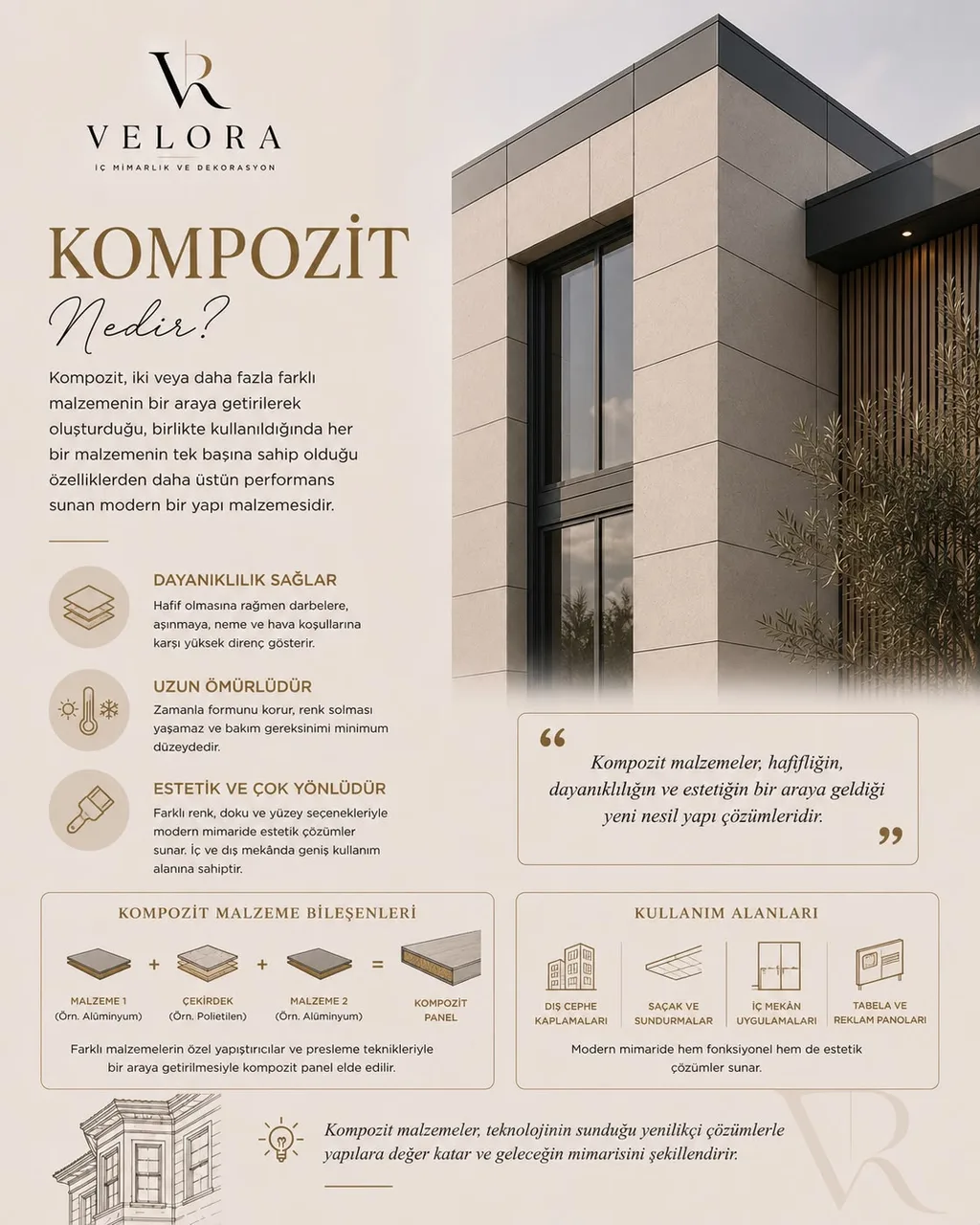
Key properties
- Strength: despite being light, it resists impact, wear, damp and weather.
- Long life: it holds its shape, does not fade and needs very little maintenance.
- Versatility: a wide range of colours, textures and finishes for contemporary architecture.
How a composite panel is built
A typical panel has three layers: two outer skins, usually aluminium, and a core between them, usually polyethylene or a mineral filler. Special adhesives and pressing techniques bond them into a single board, combining the stiffness of aluminium with the lightness of the core.
Where it is used
- Façade cladding: the most common use, in rainscreen systems.
- Canopies and soffits: its light weight spans wide openings.
- Interior work: lift cars, column casings and ceiling details.
- Signage: ideal thanks to its flatness and dimensional stability.
Fire class matters
Polyethylene cored panels are combustible; in tall buildings and on escape routes a mineral filled, A2 class panel must be used. On façades, fire classification comes before price.
Points to watch
- Leave a ventilated cavity behind the panel.
- The supporting frame should be aluminium and isolated against galvanic corrosion.
- Panels fixed without expansion allowance bulge in summer heat.
- Remove the protective film immediately after installation — left in the sun it bonds to the surface.
Tagskompozitcephepanel