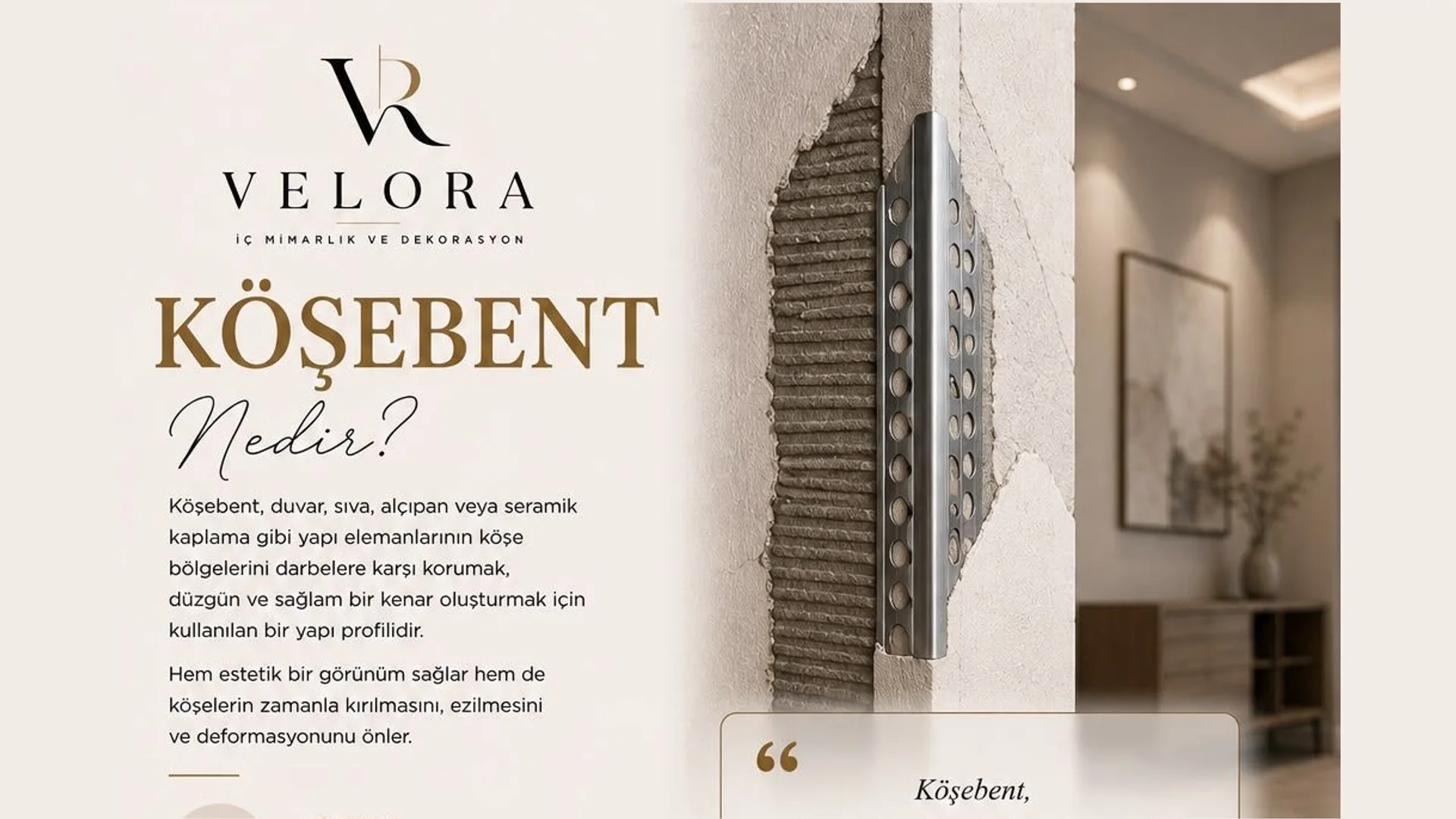
The building profile that protects plaster, drywall and tile corners from impact. A small detail that decides how long an edge survives.
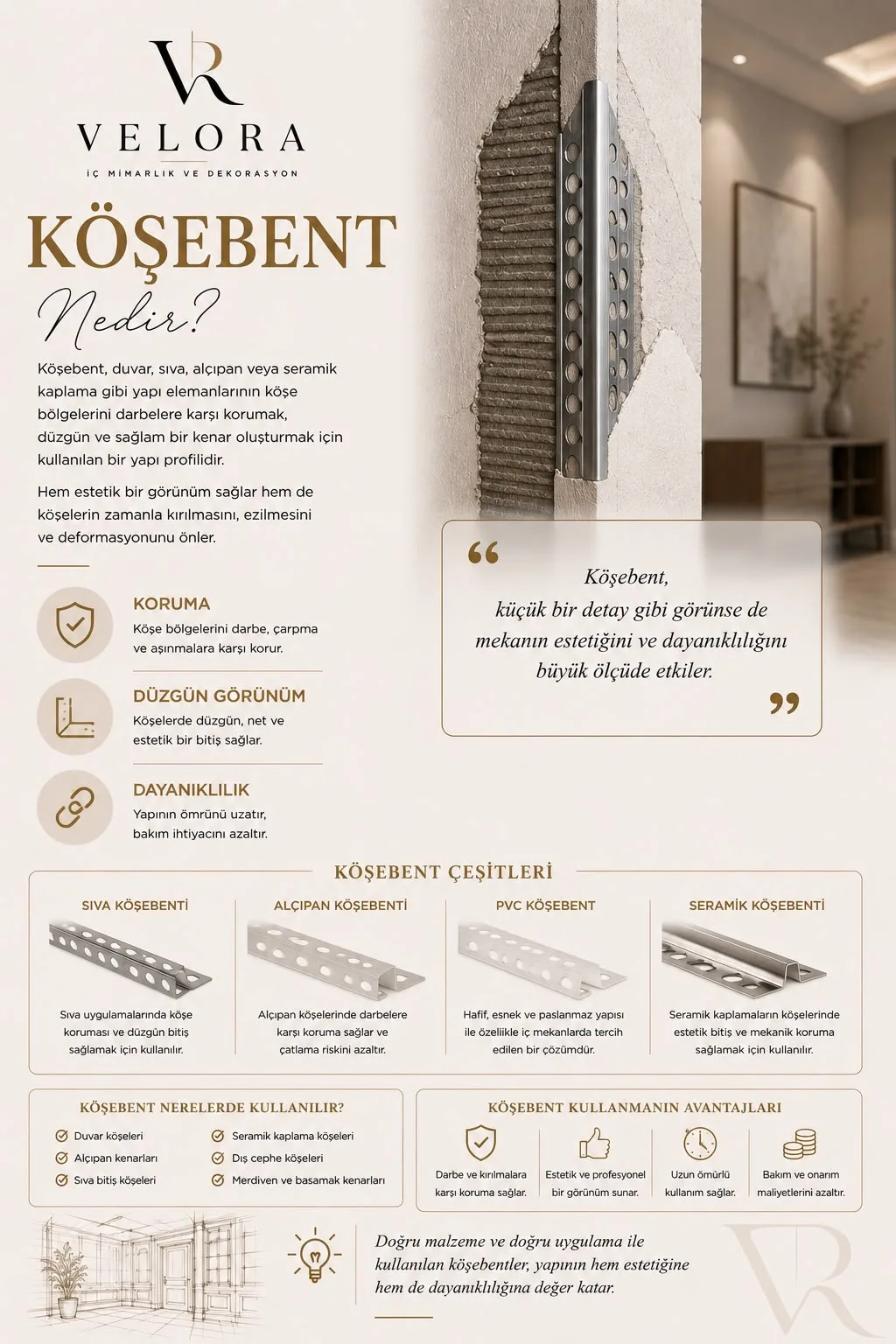
A corner bead is a profile fixed at the corners of plaster, drywall, render or tile to protect them from impact and to create a straight, solid edge. It looks better and it stops the corner from chipping and deforming over time.
What it does
- Protection: shields the corner from knocks, impact and wear.
- A straight line: gives a crisp, clean finish at the arris.
- Durability: extends the life of the finish and reduces repair work.
Types
- Render bead: used in plaster work; its perforations let the mortar key into the profile.
- Drywall bead: protects plasterboard corners and reduces cracking.
- PVC bead: light, flexible and rustproof — the usual choice indoors.
- Tile trim: gives tiled corners a finished edge and mechanical protection.
Where it is used
- Wall corners and render stops
- Plasterboard edges and niche reveals
- Tiled corners and splashback edges
- External façade corners
- Stair and step nosings
Advantages
- Protects against impact and chipping.
- Delivers a professional looking edge.
- Extends the service life of the finish.
- Cuts maintenance and repair costs.
Points to watch
- The profile must be set plumb and square — a crooked bead cannot be hidden by paint.
- Use galvanised or PVC in wet areas; never bare steel.
- A render bead belongs inside the mortar, not sitting proud of it.
Tagsköşebentprofildetay