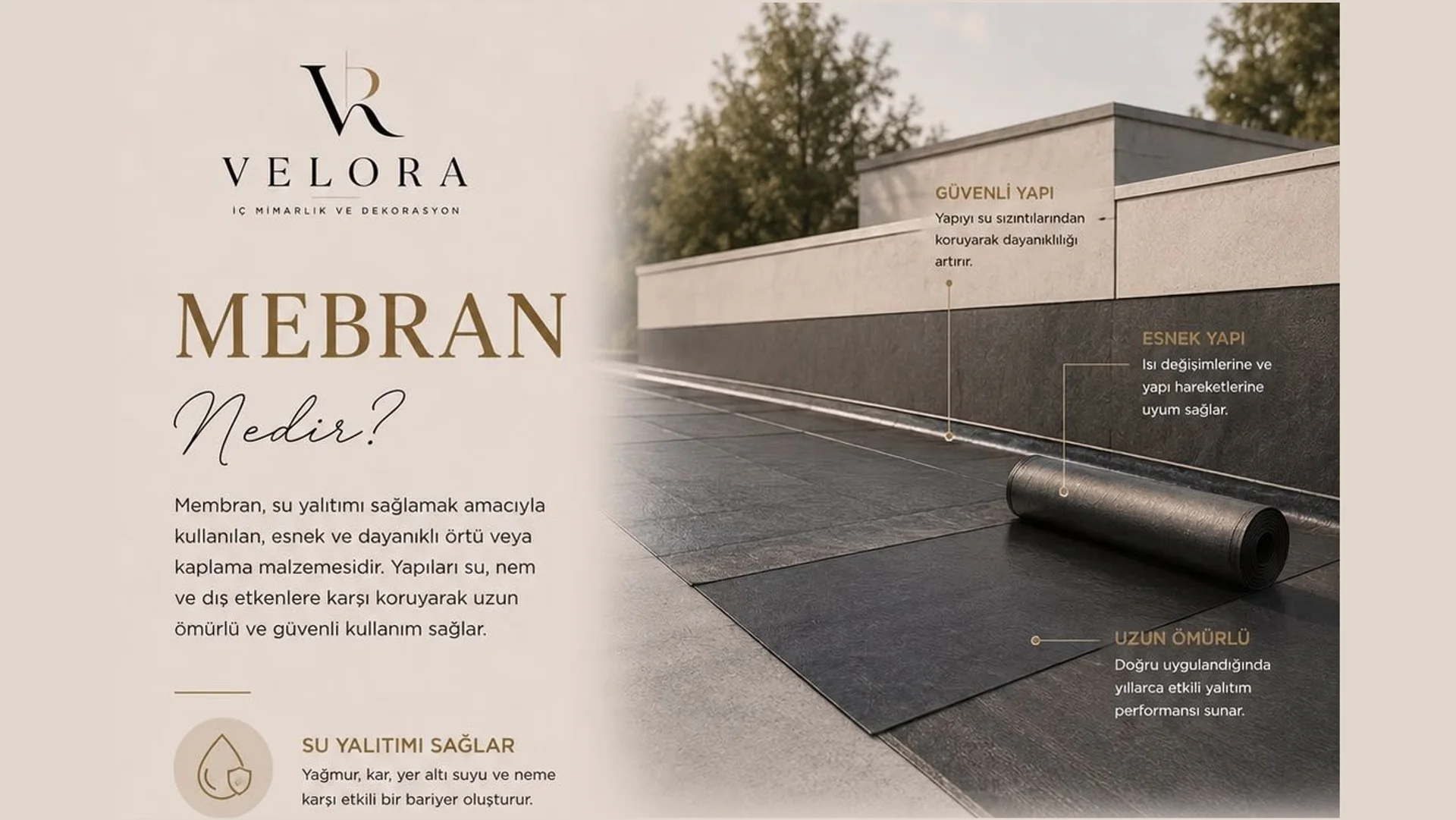
The flexible sheet used for waterproofing. On roofs, foundations, terraces and wet rooms it decides how long a building lasts.
A waterproofing membrane is a flexible, durable sheet or coating used to keep water out. It protects the structure against rain, damp and weather, and is what makes long service life possible.
What it provides
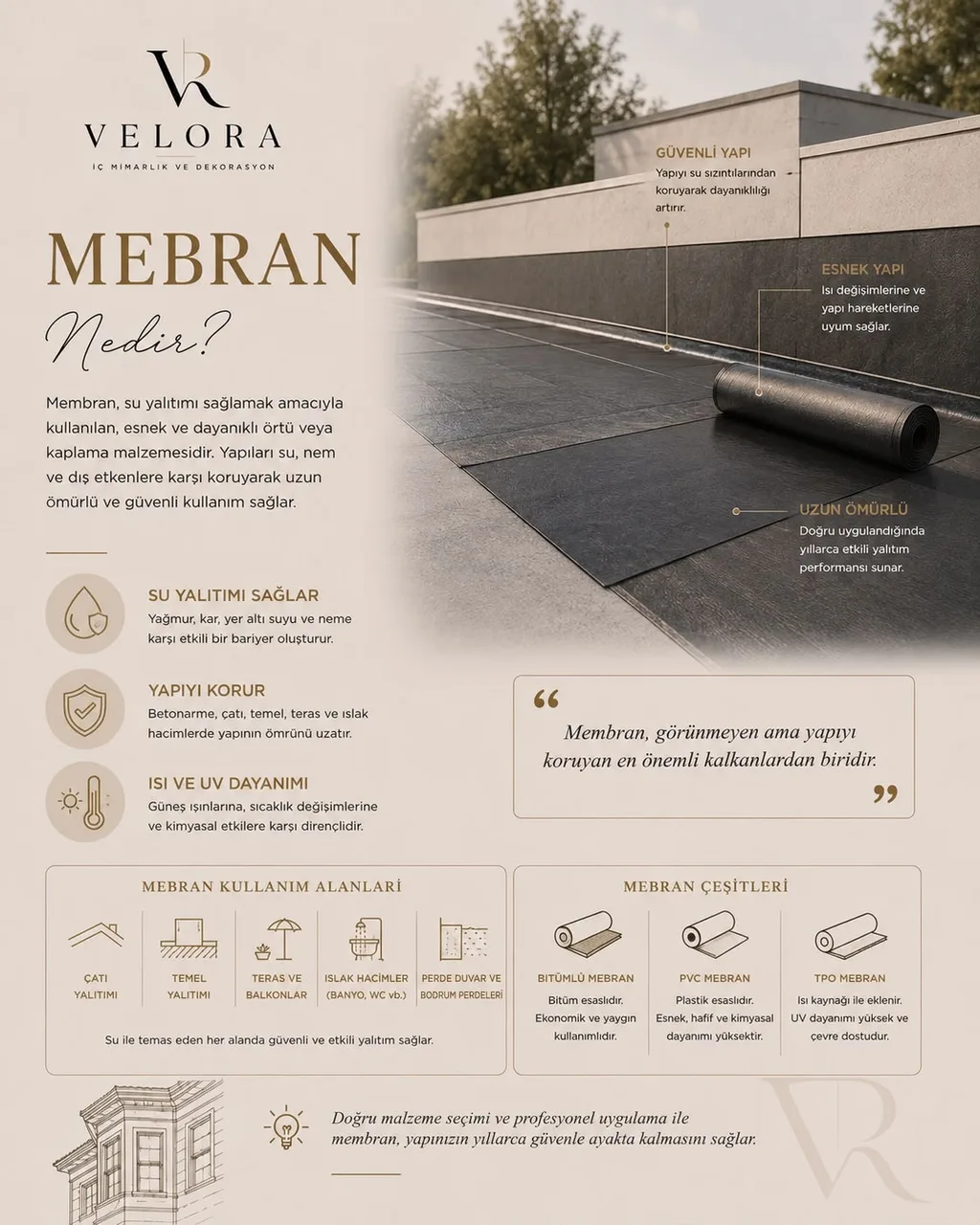
- Waterproofing: an effective barrier against rain, snow, groundwater and damp.
- Protection: extends the life of concrete, roofs, foundations, terraces and wet rooms.
- Heat and UV resistance: stands up to sunlight, temperature swings and chemicals.
- Flexibility: follows thermal movement and structural movement.
Types
- Bituminous: bitumen based, economical and widely used, torch applied.
- PVC: plastic based, flexible, light and chemically resistant.
- TPO: heat welded, high UV resistance and environmentally friendlier.
- Liquid applied: brushed or rolled on, giving a seamless surface around complex details.
Where it is used
- Roof waterproofing
- Foundation waterproofing
- Terraces and balconies
- Wet rooms — bathrooms and WCs
- Basement retaining walls
Rules for correct installation
- The substrate must be clean, dry and smooth, and always primed.
- Laps of at least 10 cm, fully bonded at every seam.
- Turn up vertical faces by at least 20 cm and terminate the top edge properly.
- Add reinforcement at drains, penetrations and corners.
Points to watch
- Do not work on a laid membrane with sharp tools or materials.
- Never cover the membrane before a flood test.
- The wrong membrane type tears within a season — the substrate and the use decide the choice.
Tagsmembransu yalıtımıçatı