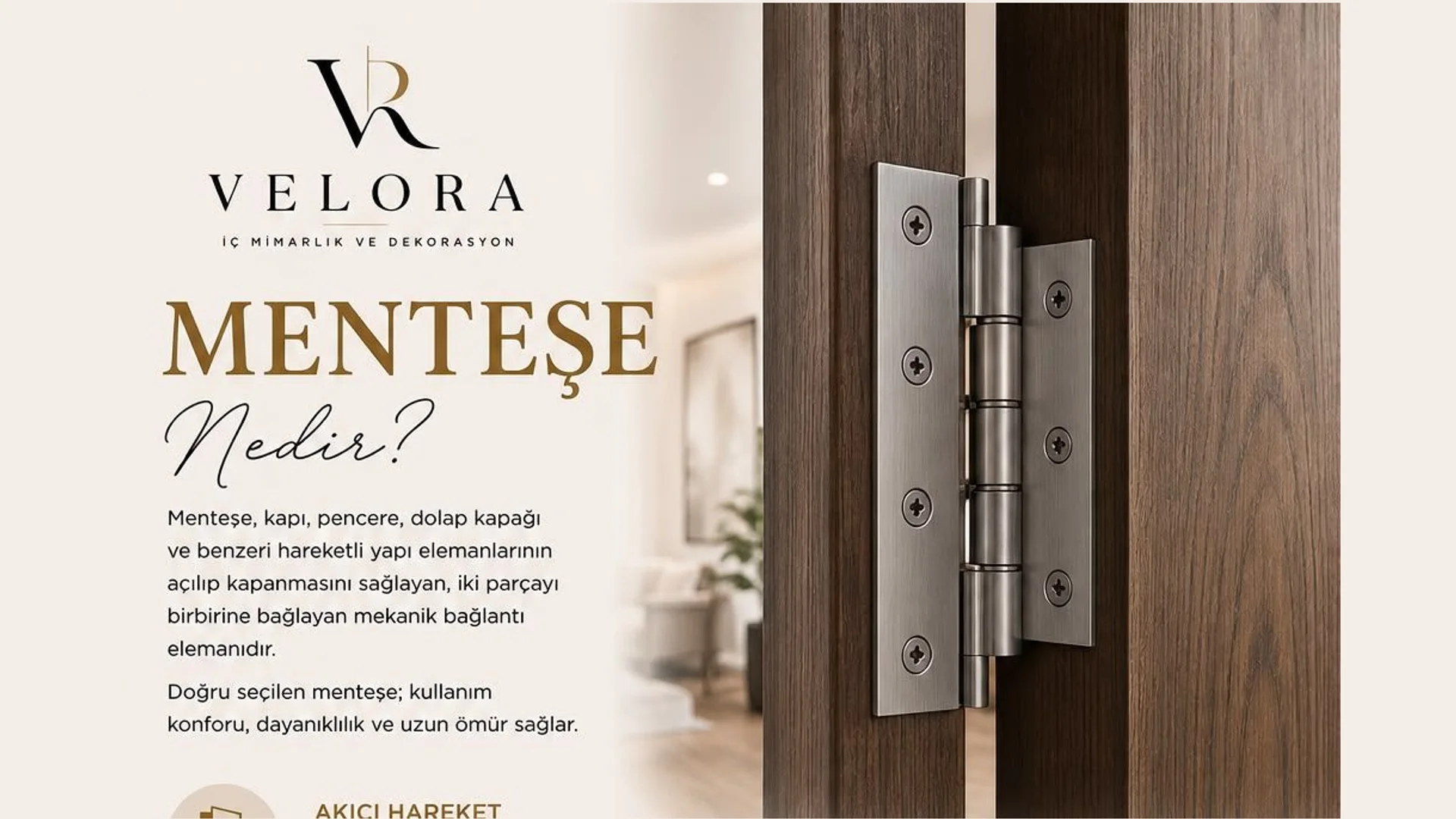
The mechanical connector that lets doors, windows and cabinet fronts open and close.
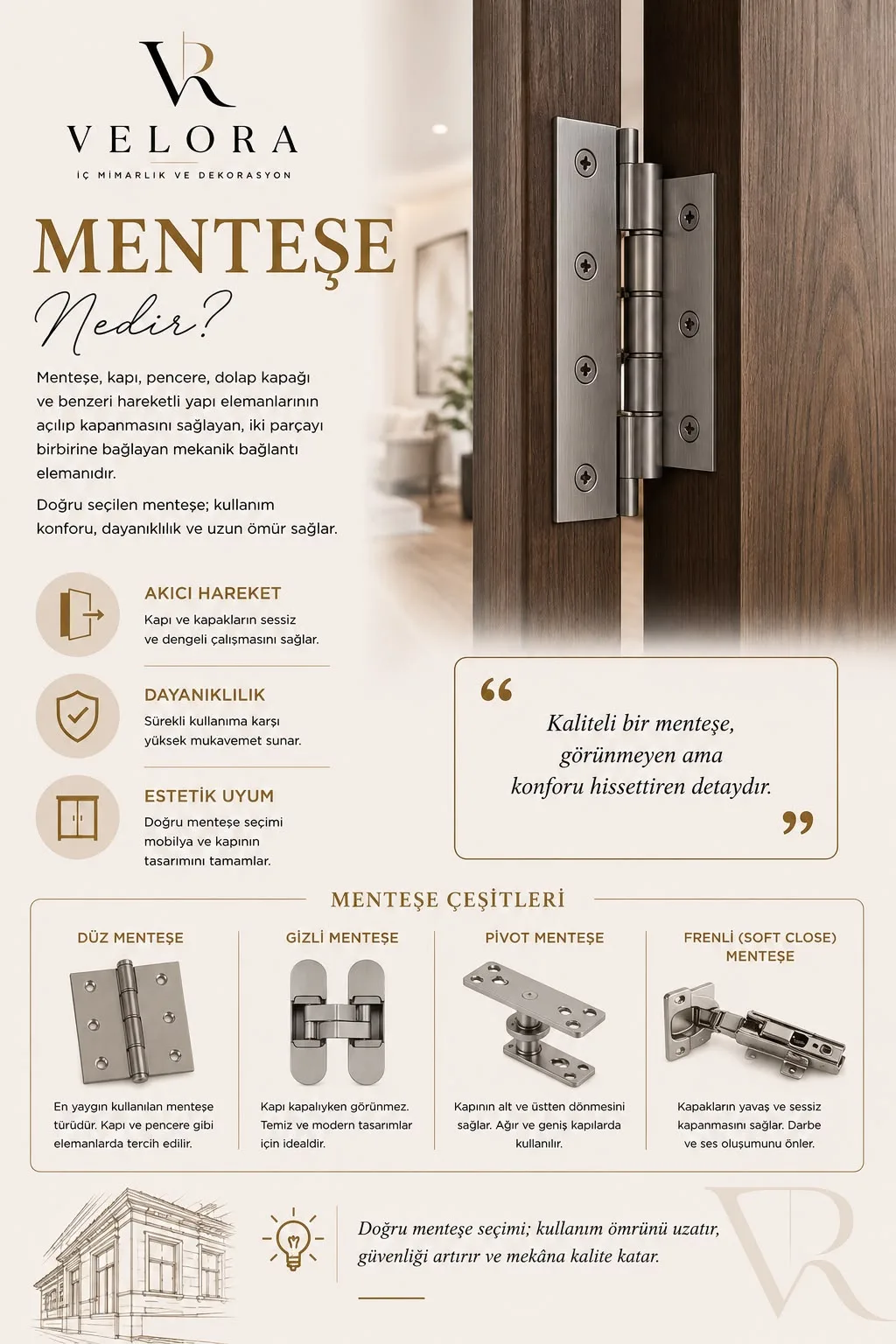
A hinge is the mechanical connector that joins two parts and lets doors, windows, cabinet fronts and similar moving elements open and close. The right hinge means comfortable use, durability and long life.
What it provides
- Smooth movement: doors and fronts run quietly and evenly.
- Durability: high strength against constant use.
- Visual coherence: the right hinge completes the design of the door or furniture.
Types
- Butt hinge: the most common type, used on doors and windows.
- Concealed hinge: invisible when the door is closed — ideal for clean, modern designs.
- Pivot hinge: turns the door from top and bottom; used on heavy and wide leaves.
- Soft close hinge: lets fronts close slowly and silently, avoiding impact and noise.
How to choose
- Weight: the weight of the leaf sets the number of hinges. Doors over 2 m or 40 kg need three.
- Material: stainless steel in wet rooms; nickel plating is enough indoors.
- Adjustability: hinges adjustable in three axes let you correct installation error afterwards.
- Opening angle: corner cabinets need hinges that open to 155°–165°.
Points to watch
- The hinge recess must be cut to the right depth for the leaf thickness.
- Screws that are too short let the hinge drop over time.
- A drop of light machine oil once a year prevents squeaking and wear.
Tagsmenteşekapımobilya